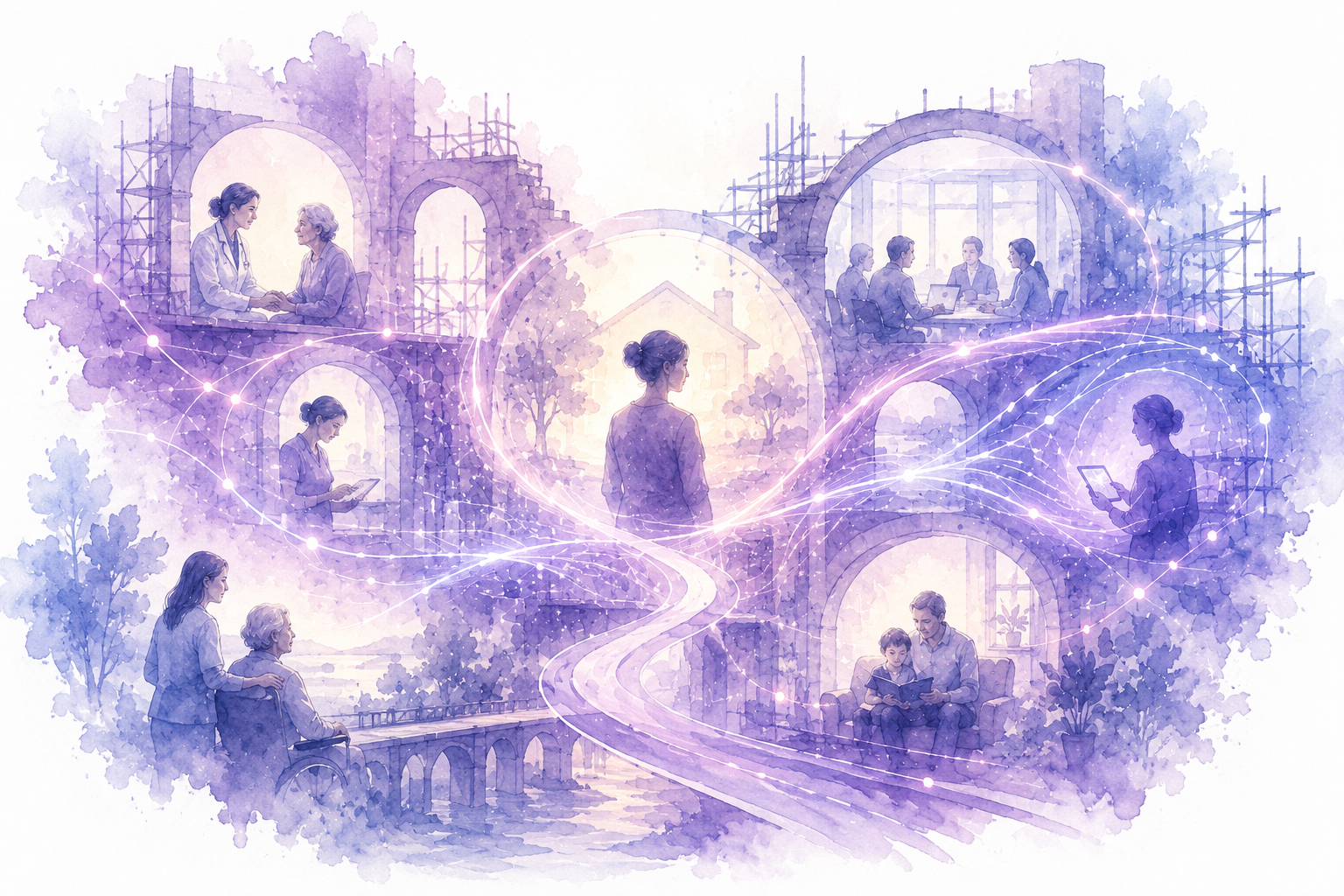
Continuous care may feel as if it is a new idea.
It is not.
Healthcare has always aspired to know people over time, notice changes early, intervene before avoidable deterioration, and support people in the daily realities where health is actually lived.
The trusted physician knew the person. The nurse noticed the pattern. The caregiver saw the change. The family carried the memory. The best care has always depended on continuity.
What changed is not the goal.
What changed is the complexity of the system.
Healthcare became more specialized, more institutional, more data-rich, more distributed, and more episodic. Each of those changes brought real benefits. But they also made continuity harder to sustain.
The person became spread across visits, records, settings, programs, claims, and handoffs.
We now have more information than ever, but often lack a living understanding of what is true now.
We have more services than ever, but often lack the operating layer that keeps those services synchronized around the person.
That is why continuous care has remained more aspiration than operating model.
Senscio’s work begins from the belief that continuity is not a luxury or an add-on.
It is the unfinished architecture of healthcare.
The opportunity now is to build the infrastructure continuity has always needed: shared state, persistent attention, signal interpretation, role coordination, member engagement, and learning across time.
Continuous care is not about replacing the people who care.
It is about giving members, caregivers, clinicians, and care teams the operating system they need to keep care moving between encounters.
The goal was always continuity.
The task now is to make it scalable.